The Hidden Sanctuaries of North Kyoto: A Study in Moss and Cedar
Why the rural hamlet of Ohara holds the true contemplative essence of Japan's ancient capital away from modern frenzy.
Article Index
1. Leaving the Central Basin
While millions flock each autumn to the crowded corridors of Gion and the gleaming gold of Kinkaku-ji, the true rhythm of Kyoto beats thirty kilometers to the north. Nestled in a narrow mountain valley where the air cools by several degrees, Ohara has historically served as a refuge for aristocrats, monks, and hermits seeking freedom from court intrigues.
Arriving at dawn on the local bus line reveals morning mist rolling across rice fields, where wooden stilted granaries still preserve the methods of the Edo era. Here, tourism ceases to be a checklist and returns to an act of quiet observation.
2. Sanzen-in: The Geometry of Moss
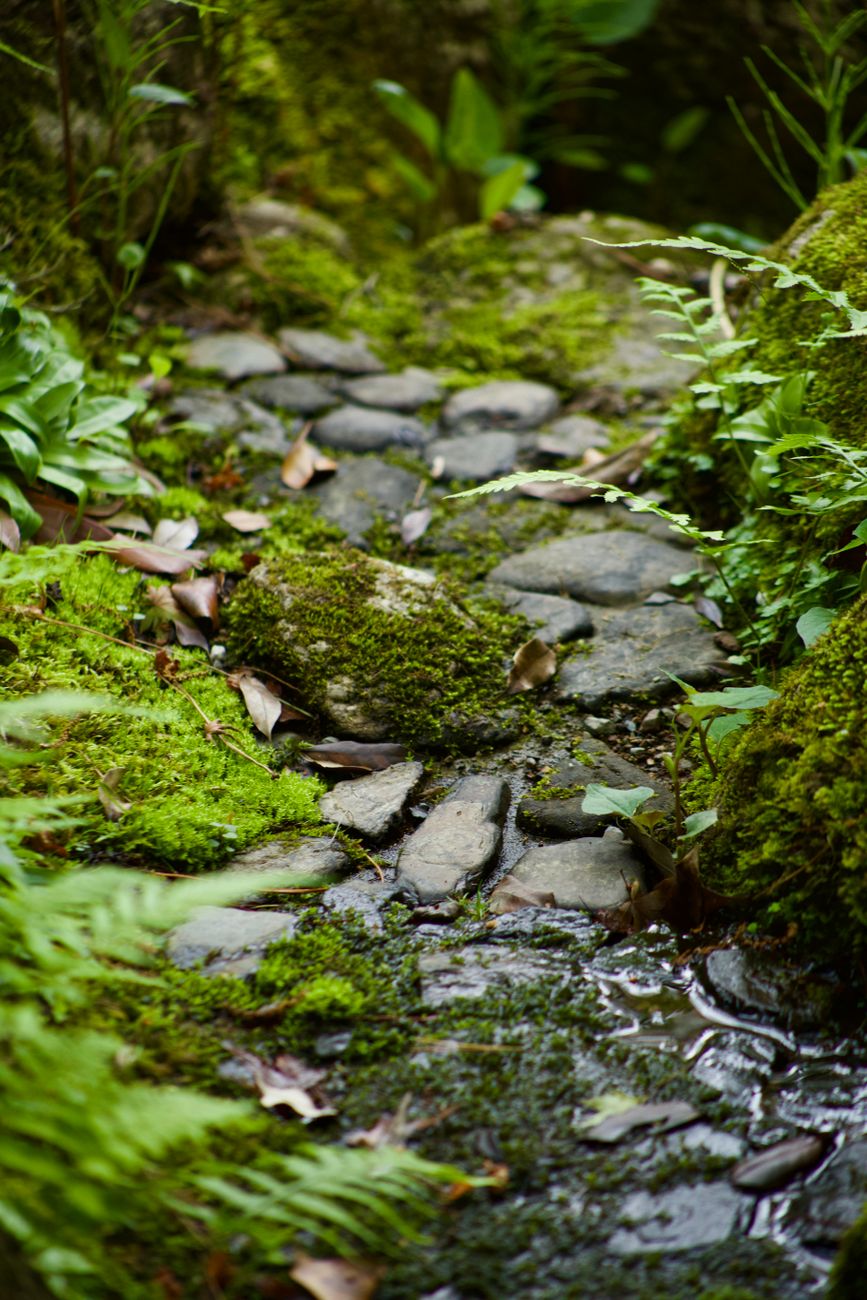
The crown jewel of the northern valley is Sanzen-in, an ancient Tendai sect Buddhist temple founded by monk Saicho in the 9th century. Walking across the polished tatami mats and emerging onto the open wooden verandas, one gazes upon the Yu-sei-en garden. Hundreds of varieties of vibrant moss carpet the undulations beneath colossal cedar trees.
“When sitting on the veranda of Sanzen-in, time is measured not in hours, but in the slow descent of droplets from ancient eaves to the stones below.”
Carved stone statues of Jizo, resting softly half-submerged in the greenery, smile with timeless gentleness. Unlike central temples where barriers and tour megaphones dictate flow, visitors here sit in absolute silence, listening only to the trickle of cold spring water through bamboo conduits.
3. Tsukemono and Cedar Crafts
The valley's culinary life is deeply tied to its mountain climate. Ohara is famous throughout Japan for shiso cultivation and traditional lactic pickling (shiba-zuke). In rustic timber workshops lining the river path, local artisans continue the age-old practice of layering red perilla leaves, eggplants, and mountain salt into massive cedar barrels weighted down with river stones.
Dining here is an homage to seasonality: bitter wild ferns in spring, sweet mountain tubers in autumn, and steaming bowls of handmade soba made from freshly harvested buckwheat.
4. Contemplative Protocol for Travelers
Visiting North Kyoto demands respectful restraint. Remove shoes without haste, tread softly on wooden planks, refrain from speaking on telephones, and ensure your camera shutter remains muted. By moving with the quiet cadence of the temple staff, the valley reveals dimensions impossible to perceive in haste.