Patagonia: Traversing the Silent Steppe
An expedition across the southern tip of the South American continent, where the wind shapes every living branch and silence reigns.
Article Index
1. The Wind as an Architect
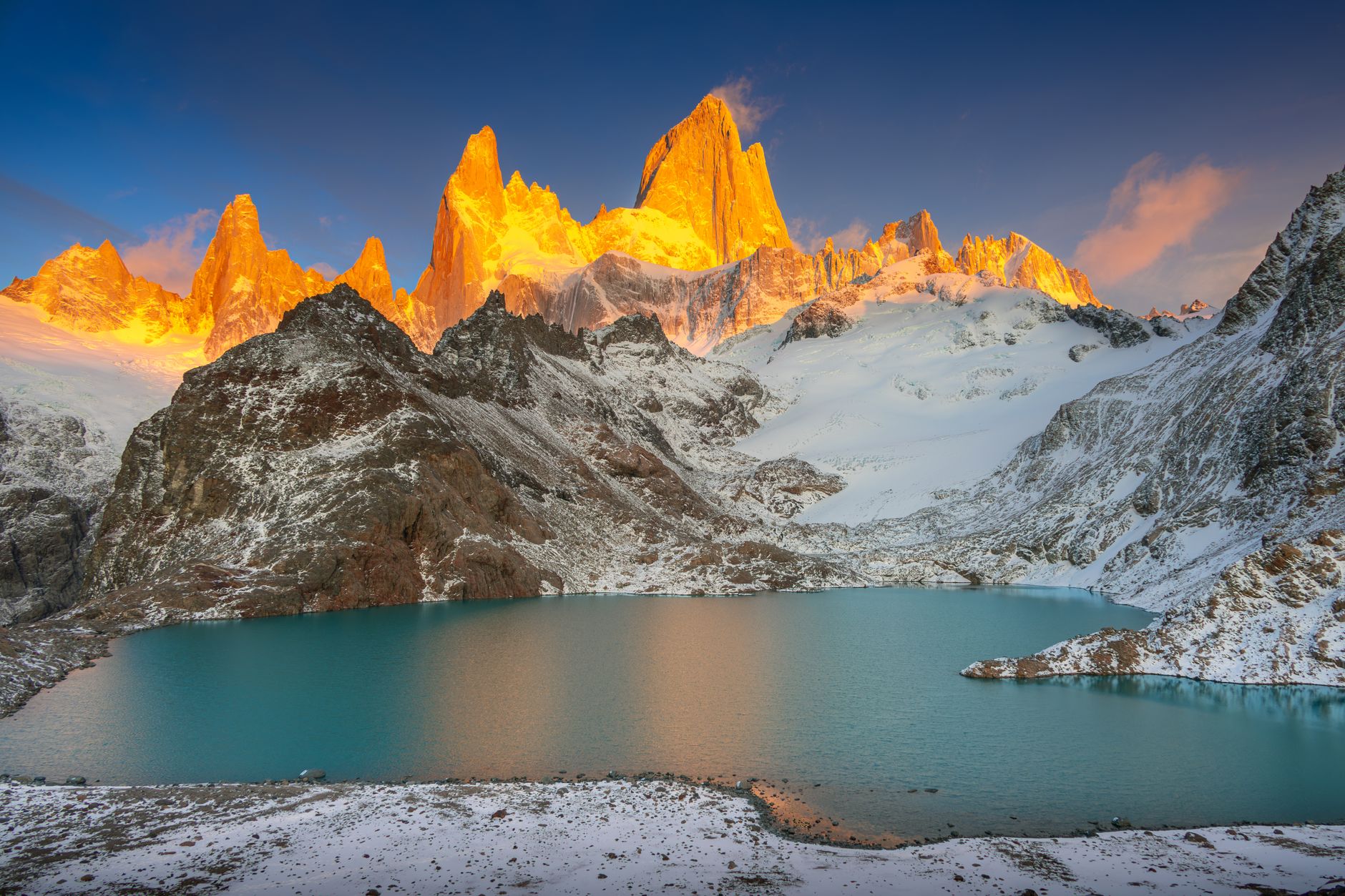
In Patagonia, one does not merely observe the climate; one endures its constant architectural influence. Gale winds howling from the Pacific race across the Southern Ice Field, flattening thorny scrub bushes into aerodynamic sculptures and carving ancient volcanic basalt into surreal forms.
Traversing the gravel trails of Ruta 40 between El Chaltén and the Chilean border, hundreds of miles pass without a visible human settlement. Guanacos roam through the yellow tussock grass while condors circle overhead.
2. Solitude of Historic Estancias
Life in the steppe has long centered on the estancia: massive sheep ranches established by European pioneers during the late 19th century. Sheltered inside thick stone walls and wood stoves, travelers find warm wool blankets, strong black coffee, and unhurried conversations with gauchos whose connection to the land spans four generations.
“In Patagonia, human pride dissolves. The horizon does not invite you to conquer it; it gently demands that you listen.”
These ranches represent the essence of slow living: no cellular reception, no synthetic distractions, just the sound of wind against tin roofs and the vast southern galaxy burning clearly in the night sky.
3. Glacial Echoes
Reaching the massive wall of the Perito Moreno or the remote tongues of Glacier Grey, the traveler encounters geological scale. As massive blue ice blocks shear off into turquoise glacial waters, the resulting thunder echoes for kilometers across mountain valleys.
To stand before five-hundred-year-old compacted ice is to gain perspective on humanity's fleeting moment in ecological time.
4. Travel as Humility
The long journey through the southern continent leaves an indelible mark. Returning to modern urban environments, travelers retain a sanctuary of quietness within themselves — a memory of boundless steppe, clear wind, and peaceful simplicity.