Dolomites in October: The Amber Season of Solitude
An alpine diary covering South Tyrol's dramatic seasonal change, when the golden larch forests meet solitary limestone monoliths.
Article Index
1. The Autumn Transformation
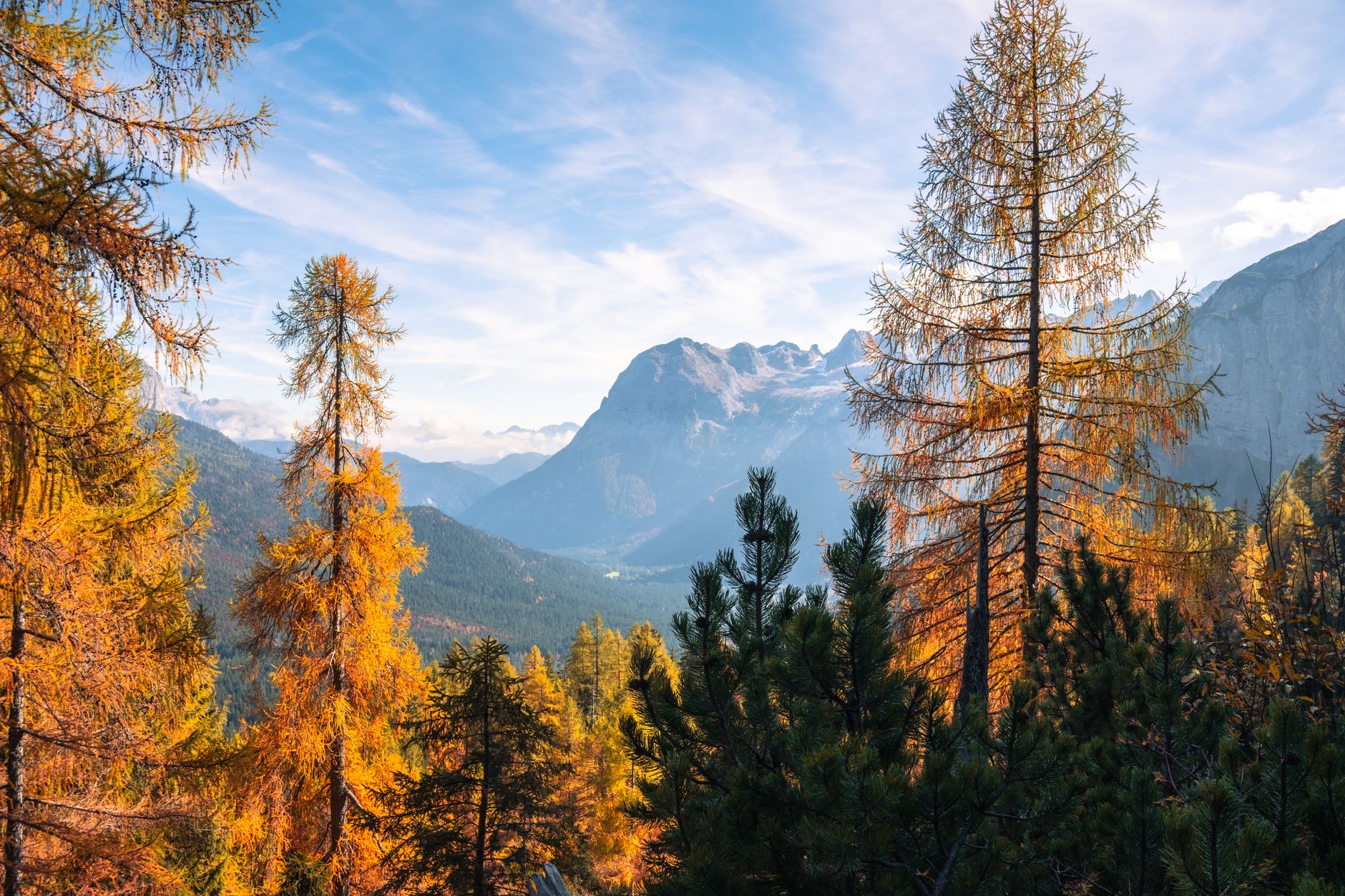
In mid-October, a profound stillness blankets the high valleys of Val Gardena and the Alta Badia. The summer hiking crowds have packed away their trekking poles, and the winter ski lifts are weeks away from spinning. In this brief window of four weeks, the Dolomites belong solely to the elements.
The European larch, known locally as Lärche, changes with dramatic intensity from pale lime to radiant amber and burnt copper. Contrasted against the jagged pale-gray limestone cliffs of the Sella massif, the scenery feels akin to a romantic 19th-century oil painting.
2. High Passes in Emptiness
Driving over the Passo delle Erbe at sunrise without a single camper van or touring motorcycle in sight is one of Europe's great travel experiences. The thin, crisp air carries the aroma of pine sap and cold mountain stone.
“To gaze upon Sass de Putia without human chatter is to understand what drew early explorers to risk life and limb for alpine wonder.”
The trails are silent. Where hundreds once stood to capture a sunset over the peaks of Seceda, only the occasional golden eagle sweeps across the alpine updrafts.
3. The Törggelen Harvest Table
As darkness falls and the temperature drops rapidly, the cultural life moves indoors to rural farmhouse taverns (Buschenschänke). South Tyrol celebrates the ancient custom of Törggelen.
Travelers gather around heavy pine tables heated by rustic ceramic stoves to savor roasted sweet chestnuts, fresh cider, cured speck, and rye Schüttelbrot. It is an unpretentious culinary ritual that binds hospitality, history, and rugged terrain together.
4. Autumn Alpine Equipment
October alpine trekking is not without risk. Snowstorms can materialize rapidly above two thousand meters. Carry sturdy insulated boots, wind-resistant wool outer layers, reliable satellite communications, and always verify conditions with local forestry rangers before venturing onto remote cols.